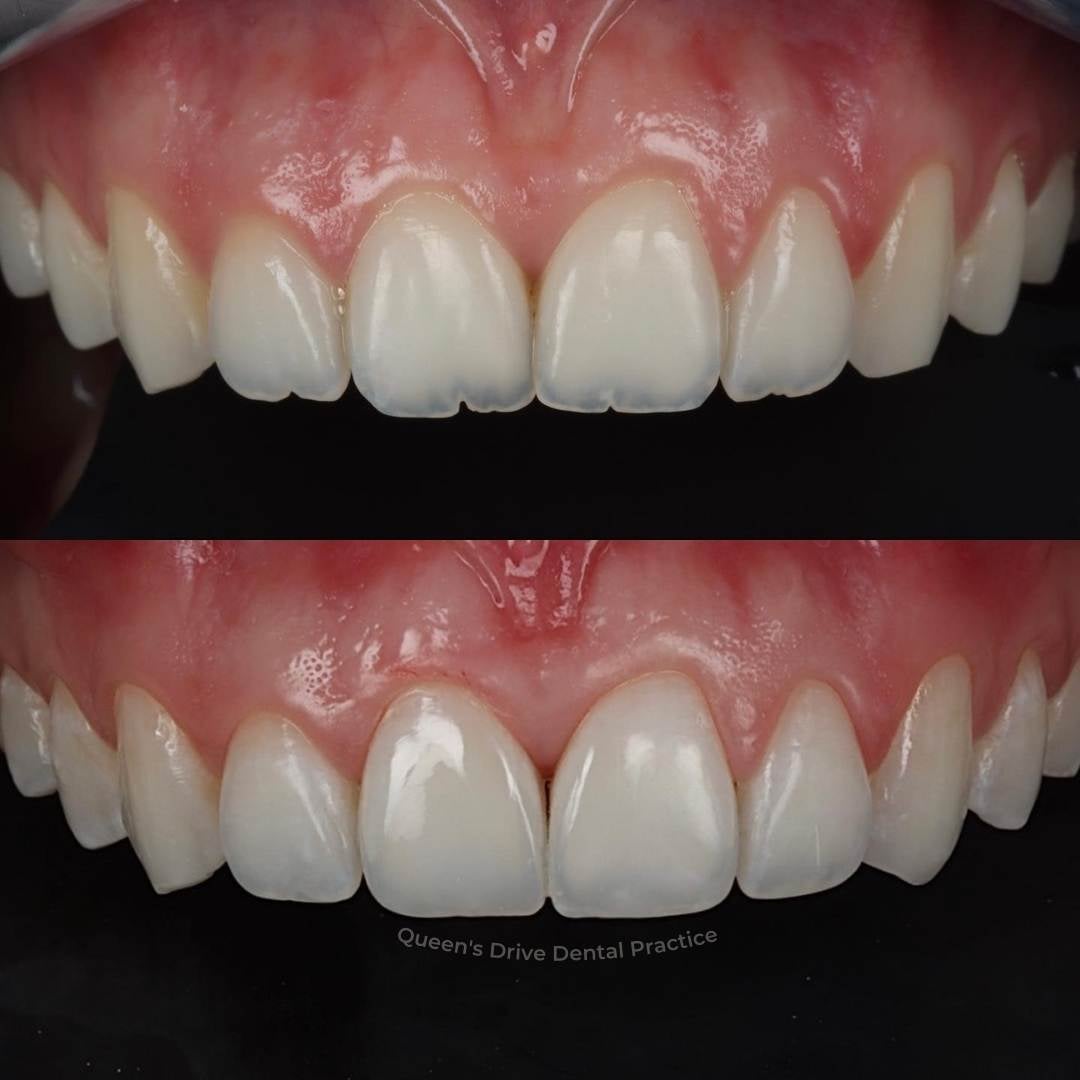
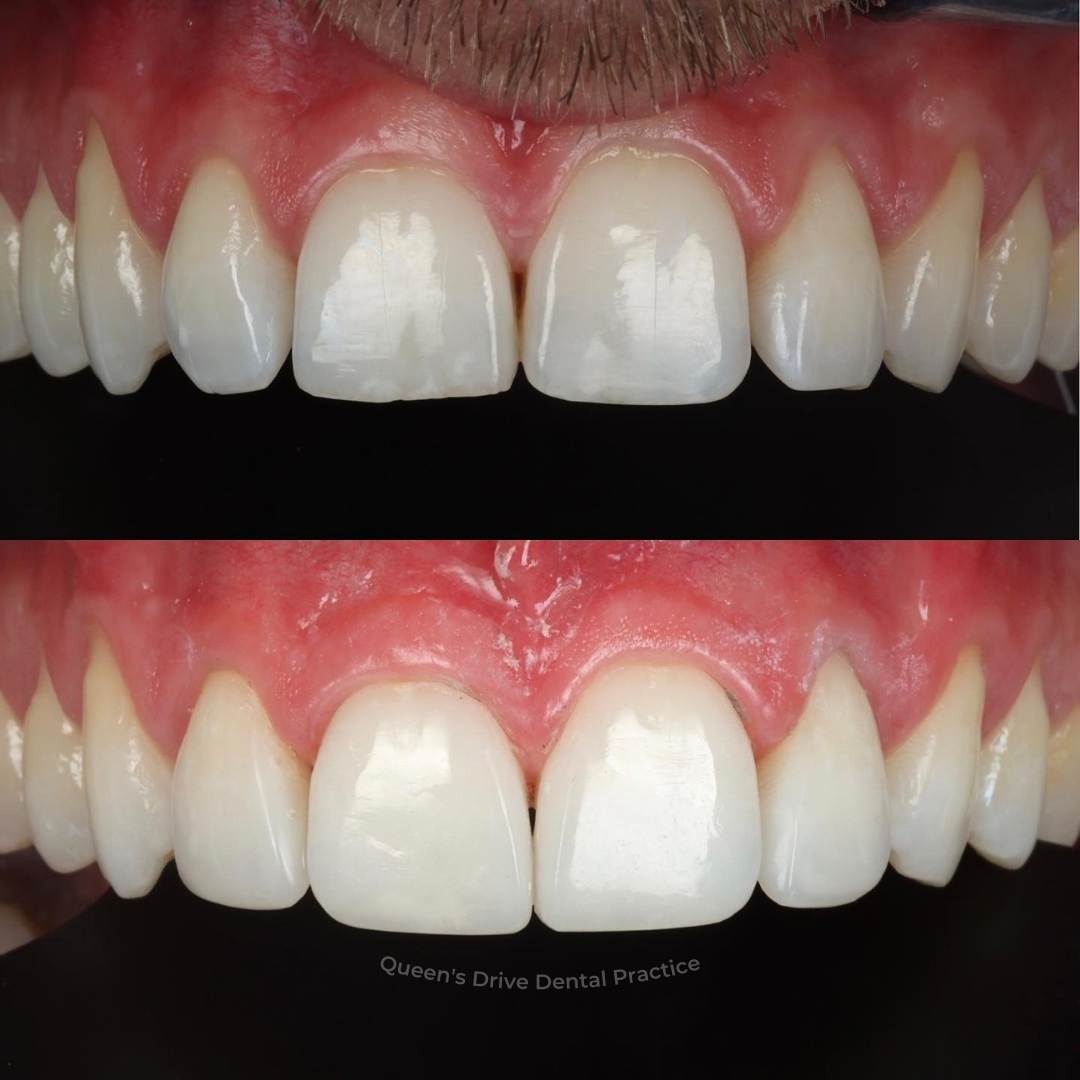
Composite Bonding vs Veneers Glasgow: Which Is Right for You?
Composite bonding and veneers are two of the most requested cosmetic treatments at Queen’s Drive Dental Practice, and both can fix chips, close gaps and transform the colour and shape of your smile. If you are comparing the two, the right choice usually comes down to how much change you want, how much of your natural tooth you want altered and how long you want the result to last.
This guide breaks down how each treatment works, where they differ and how to work out which one suits your smile before your consultation.
What is composite bonding?
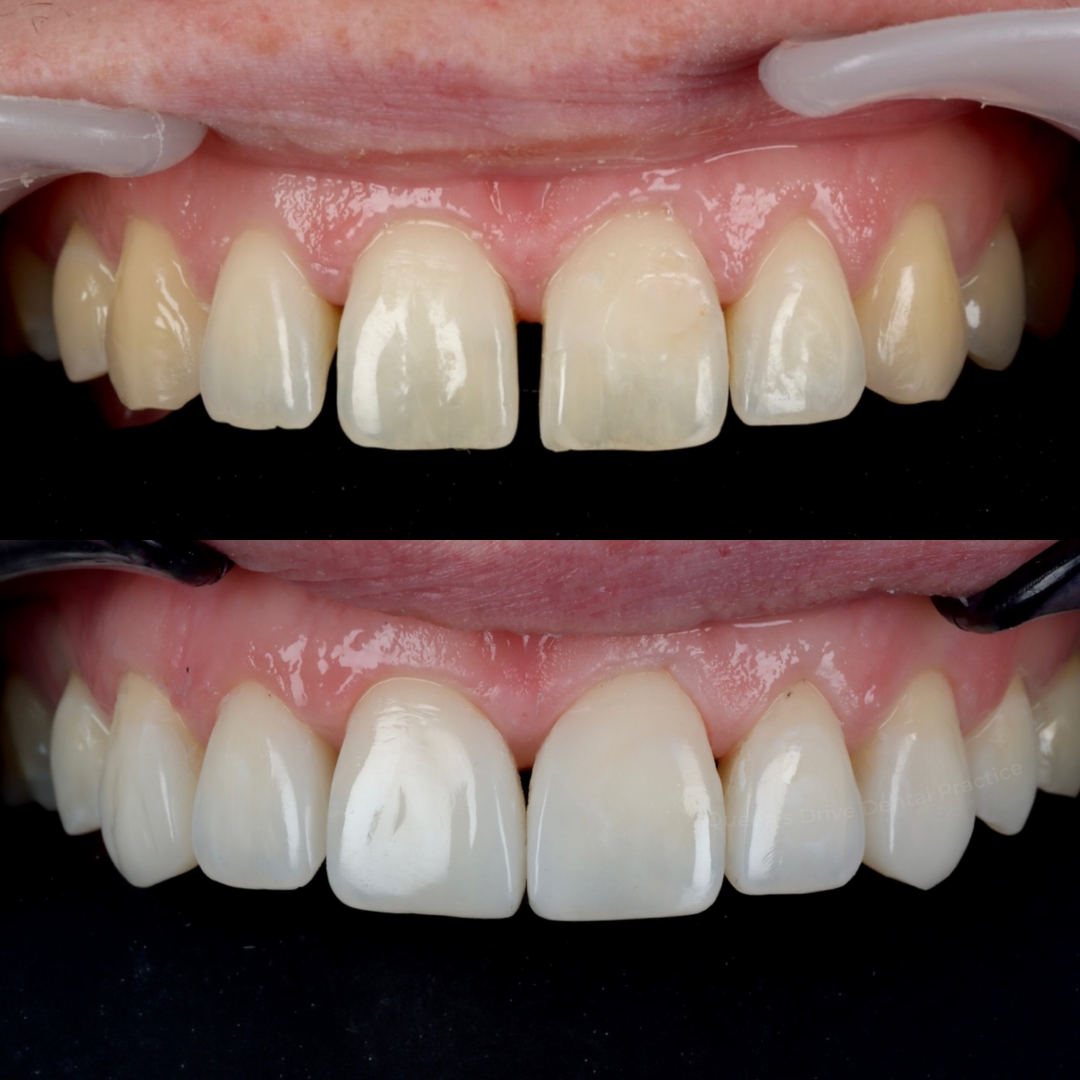
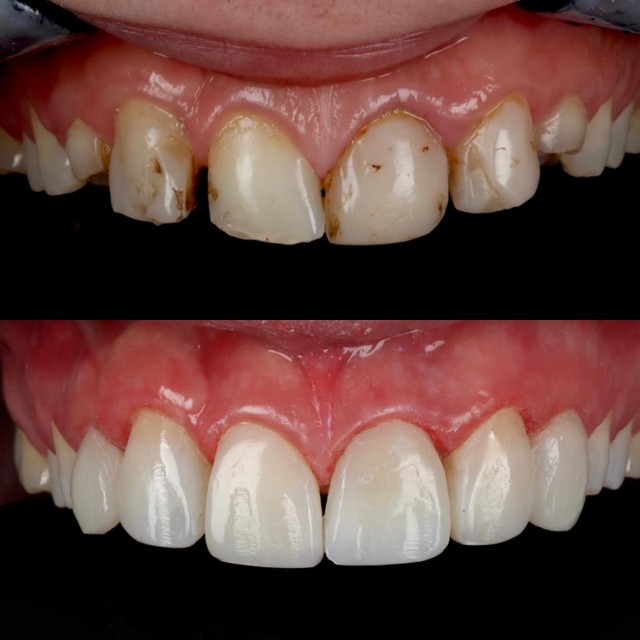
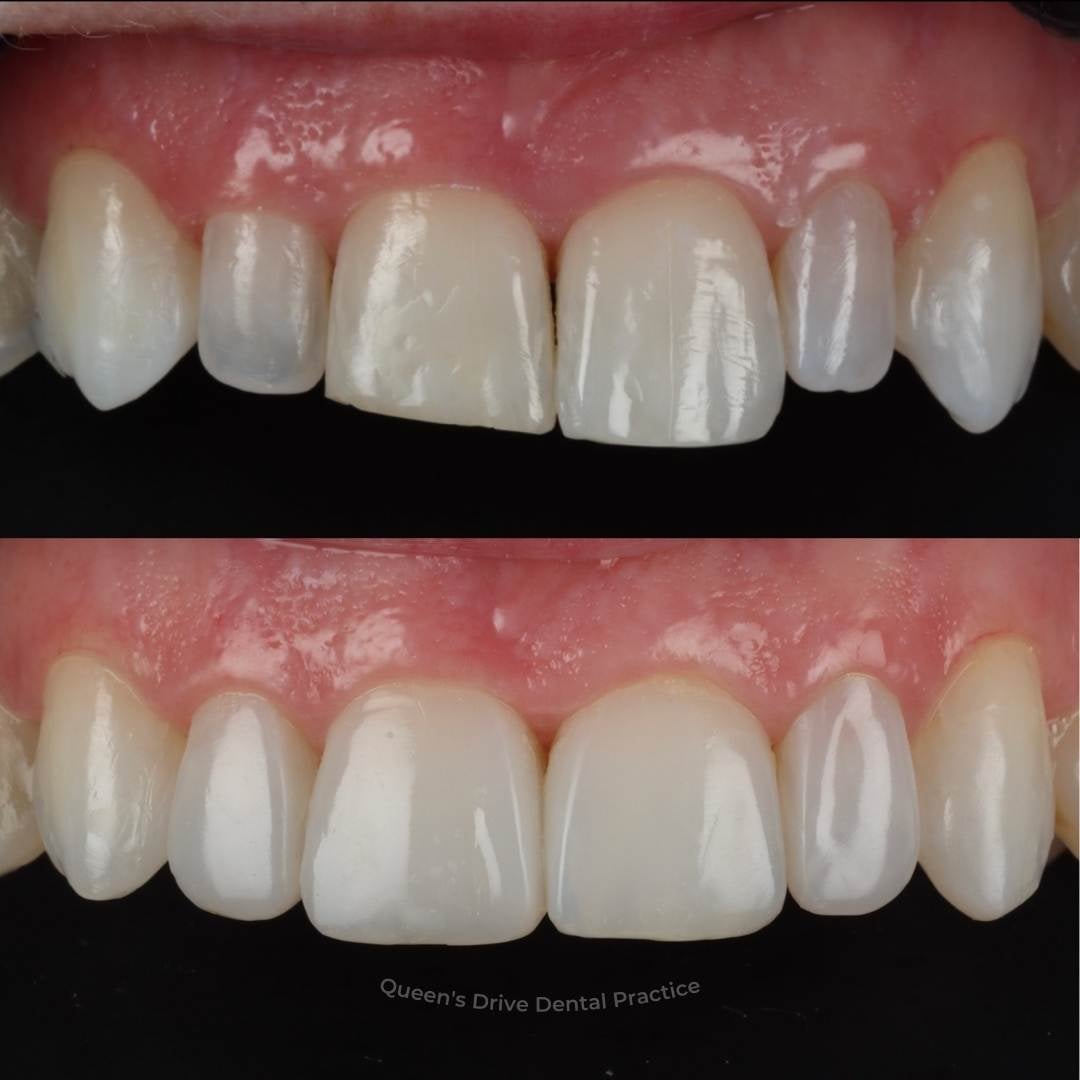
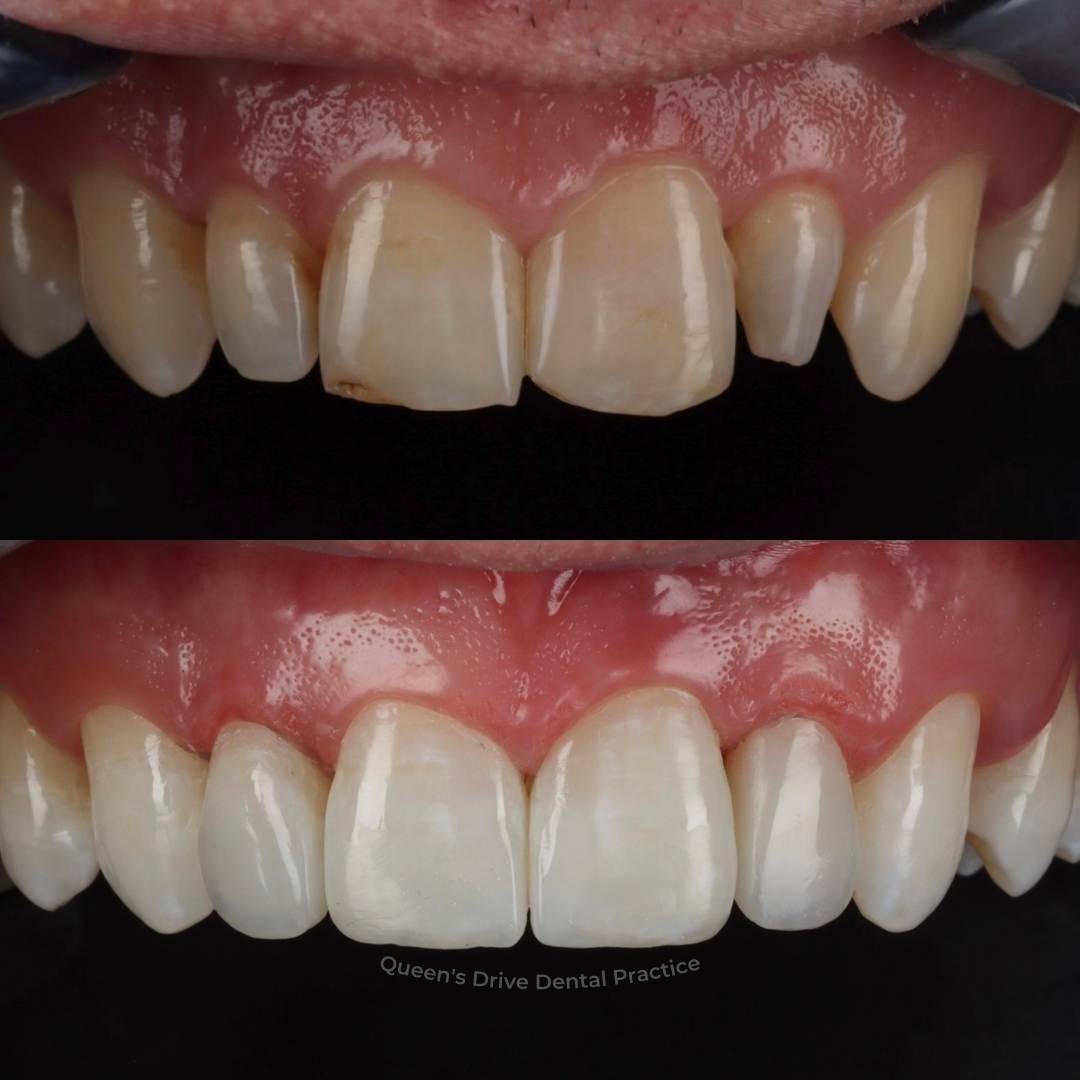
Composite bonding involves applying tooth coloured composite resin to your existing teeth, moulded by your dentist to create a natural looking match with your surrounding teeth. It is usually completed in a single visit and typically does not require anaesthesia. Since little or no enamel removal is usually required, it is a conservative way to improve the appearance of your teeth while preserving much of your natural tooth structure.
With proper care, composite bonding at Queen’s Drive Dental Practice can last up to 10 years.
Composite veneers are a related but distinct option. They use composite resin to cover more of the visible tooth surface and can provide a fuller smile transformation while remaining more conservative than porcelain veneers. They may also be a suitable option for patients who are unsure about committing to porcelain veneers.
What are veneers?
Veneers are thin, custom made shells fitted over the front of your teeth. Porcelain veneers have a similar strength and colour to natural teeth, with translucent layers that reflect light for a bright, natural looking finish, and can last well over a decade with good care.
Queen’s Drive Dental Practice also offers Edelweiss Direct Veneers, a same day alternative treated with a laser for a glossy finish and completed in a single appointment.
Veneers are designed to be durable and relatively straightforward to maintain, but their longevity depends on factors including your oral hygiene, habits and how well you care for them. If a veneer chips, loosens or develops another issue, your dentist can assess whether it can be repaired or needs to be replaced.
Composite bonding vs veneers Glasgow: the key differences
- Tooth alteration: bonding usually requires little or no enamel removal, while porcelain veneers typically need a small amount of enamel removed to fit properly
- Visits: bonding is generally completed in a single visit, while porcelain veneers typically need more than one because your teeth are prepared before the laboratory made veneers are fitted
- Coverage: bonding suits one or two teeth with a specific issue, while veneers are often used for a fuller smile transformation across several teeth
- Reversibility: composite bonding and composite veneers are more conservative than porcelain veneers because little or no enamel may need to be removed. Porcelain veneers involve permanent alteration to the enamel
- Cost: bonding is generally a more affordable alternative to veneers and crowns, with porcelain veneers representing the larger investment
Which is right for you?
If you have a single chip, gap or discolouration you want to address quickly and affordably, composite bonding is often the simplest solution. If you want a fuller transformation, veneers offer more scope to change the shape, size, colour and overall appearance of several teeth.
Many patients pair veneers or bonding with teeth whitening beforehand, so the finished result matches a brighter overall shade. Your dentist will let you know if you are not quite a candidate for a particular option and talk through the alternatives available to you.
There is no single treatment that is right for everyone, which is why your dentist will assess your teeth, discuss your goals and recommend the approach that best suits your smile.
What does it cost, and how do you get started?
Cost for both treatments depends on the number of teeth treated and the complexity of your case, so pricing is confirmed at your consultation rather than quoted as a blanket figure. Flexible payment options are available.
Getting started begins with a consultation, where the team will assess your teeth, discuss your goals and let you know which treatments, or combination of treatments, would suit you best. Regular check ups afterwards allow the team to monitor your bonding or veneers and address any chips, loosening or staining early.
Why choose Queen’s Drive Dental Practice
Queen’s Drive Dental Practice is based at 118 Queen’s Drive in Glasgow, and the team’s stated goal is to provide a comfortable dental experience that leaves patients feeling confident, relaxed and cared for.
Anthony O’Keefe is regularly named by patients for his composite bonding and veneer work, having recently led a complete smile transformation for a competition winner using a composite veneer smile makeover.
“I have honestly never had a dentist like Anthony in all my life. His work is just another level. I have every faith in him to help me get beautiful teeth and smile. Thanks for keeping me smiling, Anthony.”
Queen’s Drive Dental Practice patient, Google review
If you are weighing up composite bonding against veneers, the best next step is a consultation rather than more research. Book your complimentary consultation with Queen’s Drive Dental Practice and get an honest recommendation tailored to your teeth.
Frequently Asked Questions
Is composite bonding cheaper than veneers?
Generally yes. Bonding is an affordable alternative to veneers and crowns, while porcelain veneers represent the larger investment, reflecting their bespoke, laboratory made finish. Your exact cost is confirmed at your consultation.
How long does composite bonding last?
With proper care, composite bonding at Queen’s Drive Dental Practice can last up to 10 years. Limiting staining foods and drinks such as coffee, tea and red wine, avoiding biting hard objects and keeping up with regular check ups can all help it stay looking its best.
Are composite veneers reversible?
Composite veneers are more conservative than porcelain veneers because they can often be placed with little or no removal of natural tooth structure. This makes them a lower commitment option for some patients who are unsure about porcelain veneers. Your dentist can advise whether they are suitable for you.
Can I still eat normally with veneers?
Yes. Once veneers are fitted, you can generally eat normally, although it is worth avoiding biting hard objects directly with your front teeth and maintaining good oral hygiene to help them last as long as possible.
Is composite bonding painful?
Composite bonding is usually a comfortable treatment and typically does not require anaesthesia. Your dentist will take care to make the procedure as comfortable as possible throughout.