Telephone: 01414235161

Author: Queens Drive Dental Practice

Choosing a Dentist in Glasgow: What to Look for in an Experienced Dental Practice | Brian S Smile Story With Olivia Posts

Choosing a Dentist in Glasgow: What to Look for in an Experienced Dental Practice

Choosing a Dentist in Glasgow: What to Look For in a Dental Practice

Choosing a dentist is an important decision. You want to know that you are in experienced hands, but you also want to feel comfortable, listened to and confident in the care you receive.

At Queens Drive Dental Practice, we understand that choosing a new dentist can sometimes feel daunting, particularly if you have not visited a dentist for some time or feel nervous about dental treatment. That is why we believe it is important to look beyond simply finding a practice that is close to home.

If you are looking for a dentist in Glasgow, here are some of the things we recommend considering before choosing a dental practice.

Meet the dental team

One of the best places to start when choosing a dentist is to find out more about the people who will be looking after you.

At Queens Drive Dental Practice, our dental team includes John Paul Delaney and Olivia Arthur, both of whom trained at the University of Glasgow.

John Paul graduated in 2013 and has developed his skills in implant and cosmetic dentistry. He has particular interests in implant dentistry, caring for dentally anxious patients and gum disease.

Olivia graduated from the University of Glasgow and has completed postgraduate training in advanced restorative and aesthetic dentistry.

Experience is important, but it is also worth considering whether your dentist has experience relevant to your individual needs. If you are considering a particular treatment, such as dental implants or cosmetic dentistry, ask about the treatment, the options available and who will be involved in your care.

Look for clear and honest communication

Dental treatment should never feel confusing.

When treatment is recommended, you should understand what has been found, why treatment may be appropriate and what your options are. You should also feel comfortable asking questions and taking the time you need to make a decision.

If you are considering treatment, it is perfectly reasonable to ask:

  • What treatment do I need and why?
  • Are there any alternatives?
  • What happens if I decide not to have treatment?
  • What will the treatment involve?
  • How much will it cost?

At Queens Drive Dental Practice, we aim to explain dental information in straightforward language without expecting patients to understand complicated dental terms.

Good communication is particularly important when treatment is more involved. Understanding what is being recommended and why can help you feel more confident about your decisions.

If you are nervous about the dentist, choose a practice that understands

For some people, visiting the dentist can be a source of anxiety. If you feel nervous about dental treatment, it is worth choosing a practice where you feel able to talk openly about your concerns.

We encourage nervous patients to tell us when they book their appointment. Knowing about your concerns in advance means we can take them into account and discuss ways of making your visits as comfortable as possible.

At Queens Drive Dental Practice, we provide information specifically for nervous patients and explain our approach to helping people feel more comfortable during treatment.

Patient feedback also reflects the importance we place on listening and communication. Patients have described feeling reassured, having treatment explained carefully and being given time and breaks when needed.

Every patient is different, so we never assume that one approach will suit everyone. If you are anxious about visiting the dentist, please let us know. It is something we are very happy to discuss.

Think about the treatments you may need

When choosing a Glasgow dentist, it is worth considering both the care you need now and any treatment you may potentially need in the future.

At Queens Drive Dental Practice, we provide general dental care alongside treatments including:

A long list of treatments does not automatically make a practice the right choice for you. What matters is finding a practice where the services, experience and approach to care match your needs.

For example, if you are primarily looking for regular check-ups and preventive dental care, you may place more importance on convenience, communication and continuity. If you are considering dental implants, orthodontic treatment or cosmetic dentistry, you may want to ask more about treatment planning and the relevant experience of the dental team.

Make sure dental fees are explained clearly

Cost is understandably an important consideration when choosing a private dentist in Glasgow.

We believe patients should have a clear understanding of the cost of proposed treatment before making a decision. At Queens Drive Dental Practice, we provide information about treatment costs and written quotations.

Having the proposed treatment and costs explained clearly can make it easier to understand exactly what has been recommended.

When discussing treatment, we recommend asking what is included in the quoted fee and whether there may be any additional costs associated with future appointments or further treatment.

If finance is available as an option, make sure you understand the terms before agreeing to anything.

Most importantly, you should never feel pressured into making a decision before you are ready. We want our patients to have the information they need to make an informed choice about their dental care.

Consider location and opening hours

Convenience can make a real difference when it comes to keeping up with regular dental appointments.

Queens Drive Dental Practice is located at 118 Queen’s Drive in Glasgow, G42 8BJ. We offer appointments throughout the week, including late appointments on Thursdays and Saturday morning appointments.

Our current opening hours are:

  • Monday: 9am–6pm
  • Tuesday: 9am–6pm
  • Wednesday: 9am–6pm
  • Thursday: 9am–9pm
  • Friday: 9am–4pm
  • Saturday: 9am–1pm

Opening hours can change, so we recommend checking our contact page for the latest information before travelling.

Read patient reviews

Patient reviews can be a useful way of finding out more about what other people have experienced at a dental practice.

At Queens Drive Dental Practice, we publish patient feedback on our website alongside reviews from Google.

When reading reviews, it is worth looking beyond the overall star rating. Pay attention to what patients actually say about the things that matter to you.

For example, some of our patients have commented on being reassured during appointments, having their concerns listened to and having procedures explained clearly.

One patient, Moira Robertson, described being a very nervous patient and said that Olivia and her dental nurse took their time and explained what was happening.

Another patient, Doug Young, commented on the time John Paul took to discuss concerns and explain what might be required in the future.

Every patient’s experience is personal, and reviews cannot guarantee that everyone will have exactly the same experience. However, they can provide a useful insight into how a practice approaches patient care.

Think about continuity of care

If you are starting a course of treatment, it can be reassuring to know who is looking after you and who you can contact if you have questions.

When choosing a dentist, it is worth asking how your treatment will be coordinated and whether you are likely to see the same dentist for your routine appointments.

If continuity is important to you, simply let the dental team know. Good communication and clear follow-up arrangements can make a real difference, particularly if you are having more involved treatment.

Your first contact can tell you a lot

Your first interaction with a dental practice can give you a good indication of what to expect.

Whether you contact us by telephone, email or through our website, you should feel that your questions are taken seriously and that you have an opportunity to explain any concerns.

This is particularly important if you are nervous about dental treatment or have not visited a dentist for some time.

For us, good patient care starts before you sit in the dental chair.

What should you ask before choosing a dentist in Glasgow?

If you are comparing dental practices, it can be helpful to make a short list of questions before you book.

Consider asking:

  • Who are the dentists and what experience do they have?
  • Does the practice offer the treatment I may need?
  • How are treatment options explained?
  • How are costs and quotations provided?
  • What support is available if I am nervous?
  • What are the practice’s opening hours?
  • What do existing patients say about their experiences?
  • Who should I contact if I have questions after treatment?

There is no single answer to what makes the “best” dentist in Glasgow. The right practice is the one where the clinical experience, services, communication and approach to patient care are right for you.

Why choose Queens Drive Dental Practice?

At Queens Drive Dental Practice, our aim is to provide high-quality dental care in an environment where patients feel listened to and comfortable.

We provide general dentistry alongside cosmetic dentistry, dental implants, teeth straightening and emergency dental care. We also understand that every patient has different needs and concerns, which is why we take the time to discuss treatment and answer questions.

If you are looking for a dentist in Glasgow and would like to find out more about our practice, our team will be happy to discuss your needs and help you decide on the next step.

Visit Queens Drive Dental Practice

Queens Drive Dental Practice
118 Queen’s Drive
Glasgow
G42 8BJ

Telephone: 0141 423 5161
Email: reception@glasgowdentist.co.uk

We look forward to welcoming you to the practice.

Continue reading

Composite Bonding vs Veneers in Glasgow: Which Is Right for You? | What Can You Expect From Queens 1 1

Composite Bonding vs Veneers in Glasgow: Which Is Right for You?

Composite Bonding vs Veneers Glasgow: Which Is Right for You?

Composite bonding and veneers are two of the most requested cosmetic treatments at Queen’s Drive Dental Practice, and both can fix chips, close gaps and transform the colour and shape of your smile. If you are comparing the two, the right choice usually comes down to how much change you want, how much of your natural tooth you want altered and how long you want the result to last.

This guide breaks down how each treatment works, where they differ and how to work out which one suits your smile before your consultation.

What is composite bonding?

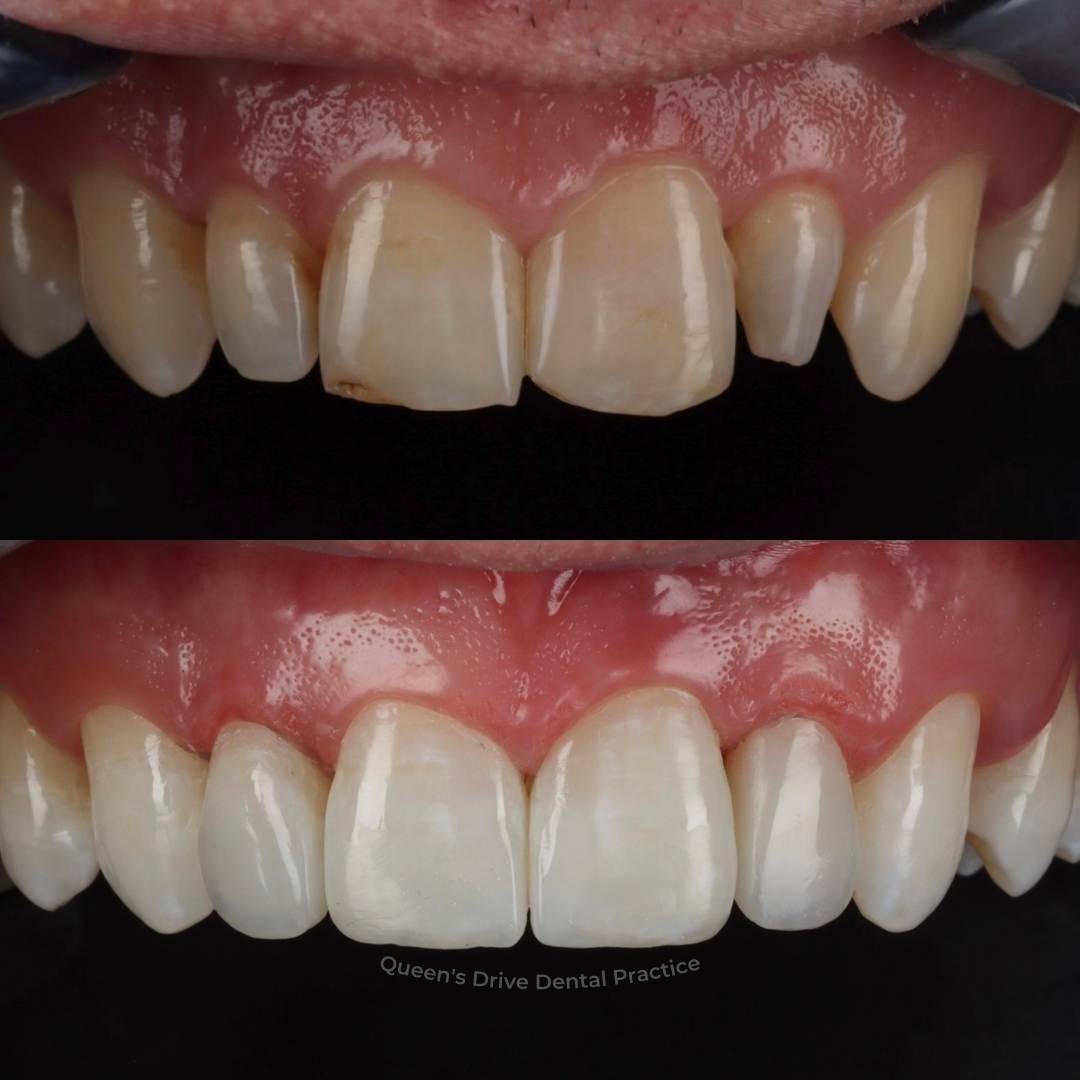
Composite bonding involves applying tooth coloured composite resin to your existing teeth, moulded by your dentist to create a natural looking match with your surrounding teeth. It is usually completed in a single visit and typically does not require anaesthesia. Since little or no enamel removal is usually required, it is a conservative way to improve the appearance of your teeth while preserving much of your natural tooth structure.

With proper care, composite bonding at Queen’s Drive Dental Practice can last up to 10 years.

Composite veneers are a related but distinct option. They use composite resin to cover more of the visible tooth surface and can provide a fuller smile transformation while remaining more conservative than porcelain veneers. They may also be a suitable option for patients who are unsure about committing to porcelain veneers.

What are veneers?

Veneers are thin, custom made shells fitted over the front of your teeth. Porcelain veneers have a similar strength and colour to natural teeth, with translucent layers that reflect light for a bright, natural looking finish, and can last well over a decade with good care.

Queen’s Drive Dental Practice also offers Edelweiss Direct Veneers, a same day alternative treated with a laser for a glossy finish and completed in a single appointment.

Veneers are designed to be durable and relatively straightforward to maintain, but their longevity depends on factors including your oral hygiene, habits and how well you care for them. If a veneer chips, loosens or develops another issue, your dentist can assess whether it can be repaired or needs to be replaced.

Composite bonding vs veneers Glasgow: the key differences

  • Tooth alteration: bonding usually requires little or no enamel removal, while porcelain veneers typically need a small amount of enamel removed to fit properly
  • Visits: bonding is generally completed in a single visit, while porcelain veneers typically need more than one because your teeth are prepared before the laboratory made veneers are fitted
  • Coverage: bonding suits one or two teeth with a specific issue, while veneers are often used for a fuller smile transformation across several teeth
  • Reversibility: composite bonding and composite veneers are more conservative than porcelain veneers because little or no enamel may need to be removed. Porcelain veneers involve permanent alteration to the enamel
  • Cost: bonding is generally a more affordable alternative to veneers and crowns, with porcelain veneers representing the larger investment

Which is right for you?

If you have a single chip, gap or discolouration you want to address quickly and affordably, composite bonding is often the simplest solution. If you want a fuller transformation, veneers offer more scope to change the shape, size, colour and overall appearance of several teeth.

Many patients pair veneers or bonding with teeth whitening beforehand, so the finished result matches a brighter overall shade. Your dentist will let you know if you are not quite a candidate for a particular option and talk through the alternatives available to you.

There is no single treatment that is right for everyone, which is why your dentist will assess your teeth, discuss your goals and recommend the approach that best suits your smile.

What does it cost, and how do you get started?

Cost for both treatments depends on the number of teeth treated and the complexity of your case, so pricing is confirmed at your consultation rather than quoted as a blanket figure. Flexible payment options are available.

Getting started begins with a consultation, where the team will assess your teeth, discuss your goals and let you know which treatments, or combination of treatments, would suit you best. Regular check ups afterwards allow the team to monitor your bonding or veneers and address any chips, loosening or staining early.

Why choose Queen’s Drive Dental Practice

Queen’s Drive Dental Practice is based at 118 Queen’s Drive in Glasgow, and the team’s stated goal is to provide a comfortable dental experience that leaves patients feeling confident, relaxed and cared for.

Anthony O’Keefe is regularly named by patients for his composite bonding and veneer work, having recently led a complete smile transformation for a competition winner using a composite veneer smile makeover.

“I have honestly never had a dentist like Anthony in all my life. His work is just another level. I have every faith in him to help me get beautiful teeth and smile. Thanks for keeping me smiling, Anthony.”

Queen’s Drive Dental Practice patient, Google review

If you are weighing up composite bonding against veneers, the best next step is a consultation rather than more research. Book your complimentary consultation with Queen’s Drive Dental Practice and get an honest recommendation tailored to your teeth.

Frequently Asked Questions

Is composite bonding cheaper than veneers?

Generally yes. Bonding is an affordable alternative to veneers and crowns, while porcelain veneers represent the larger investment, reflecting their bespoke, laboratory made finish. Your exact cost is confirmed at your consultation.

How long does composite bonding last?

With proper care, composite bonding at Queen’s Drive Dental Practice can last up to 10 years. Limiting staining foods and drinks such as coffee, tea and red wine, avoiding biting hard objects and keeping up with regular check ups can all help it stay looking its best.

Are composite veneers reversible?

Composite veneers are more conservative than porcelain veneers because they can often be placed with little or no removal of natural tooth structure. This makes them a lower commitment option for some patients who are unsure about porcelain veneers. Your dentist can advise whether they are suitable for you.

Can I still eat normally with veneers?

Yes. Once veneers are fitted, you can generally eat normally, although it is worth avoiding biting hard objects directly with your front teeth and maintaining good oral hygiene to help them last as long as possible.

Is composite bonding painful?

Composite bonding is usually a comfortable treatment and typically does not require anaesthesia. Your dentist will take care to make the procedure as comfortable as possible throughout.

Continue reading

Can Composite Bonding Repair Chipped Teeth? | Robyns Smile Story Olivia Arthur And Tony Okeefe 1080 X 1080 Px 3 1

Can Composite Bonding Repair Chipped Teeth?

Can Composite Bonding Repair Chipped Teeth?

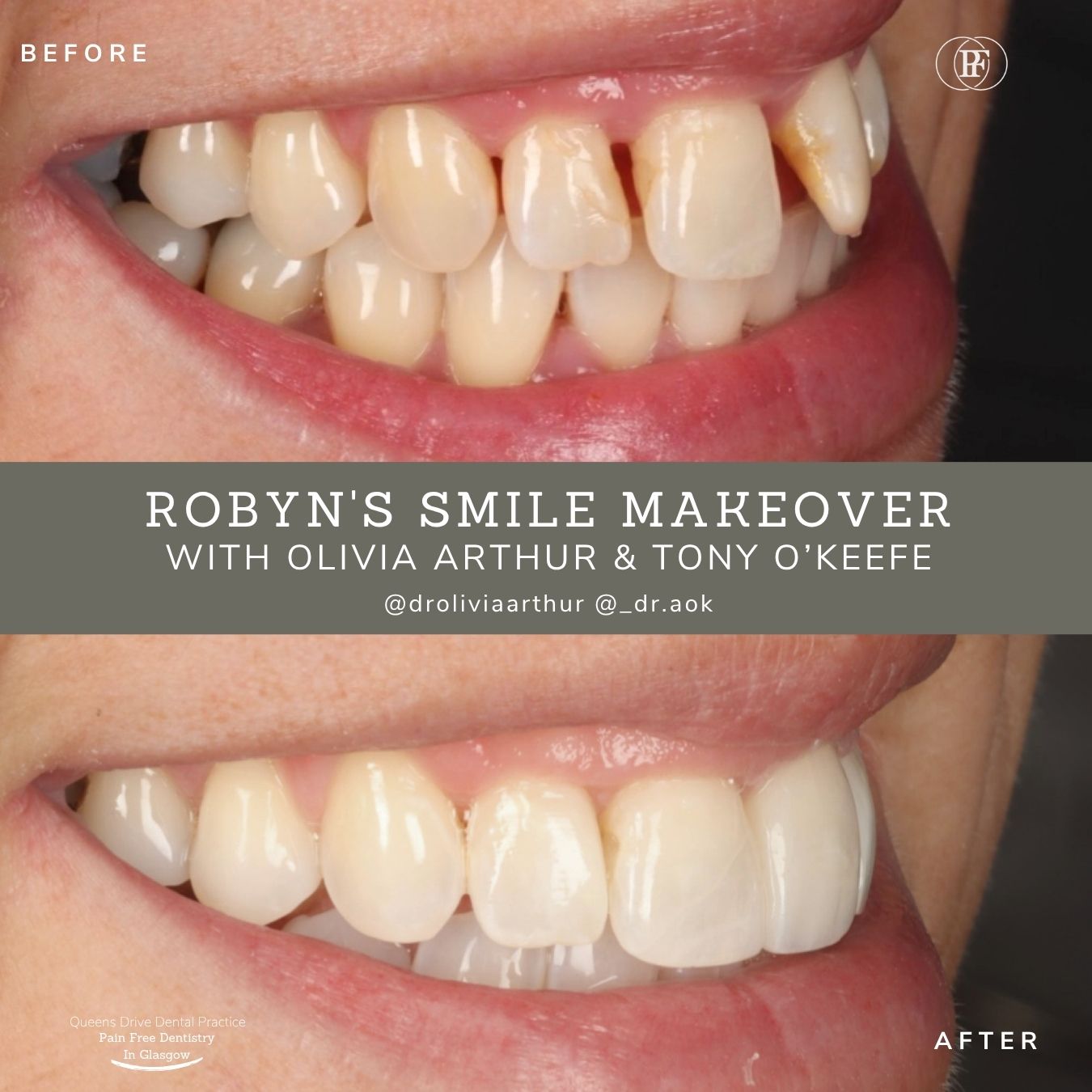
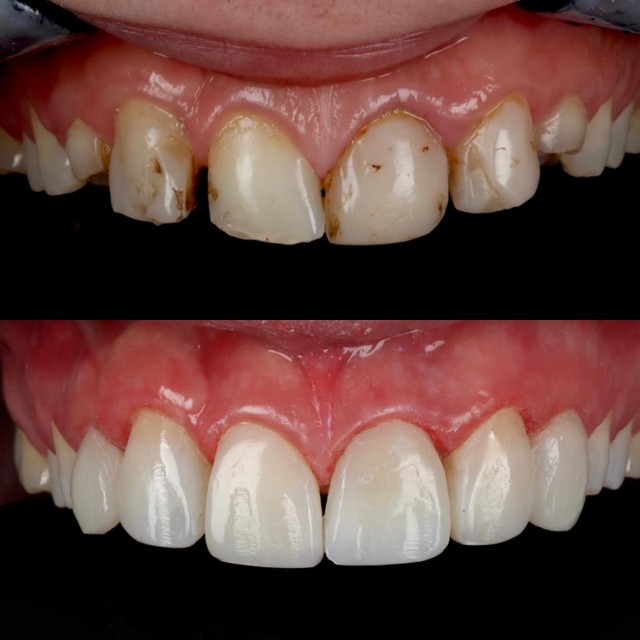
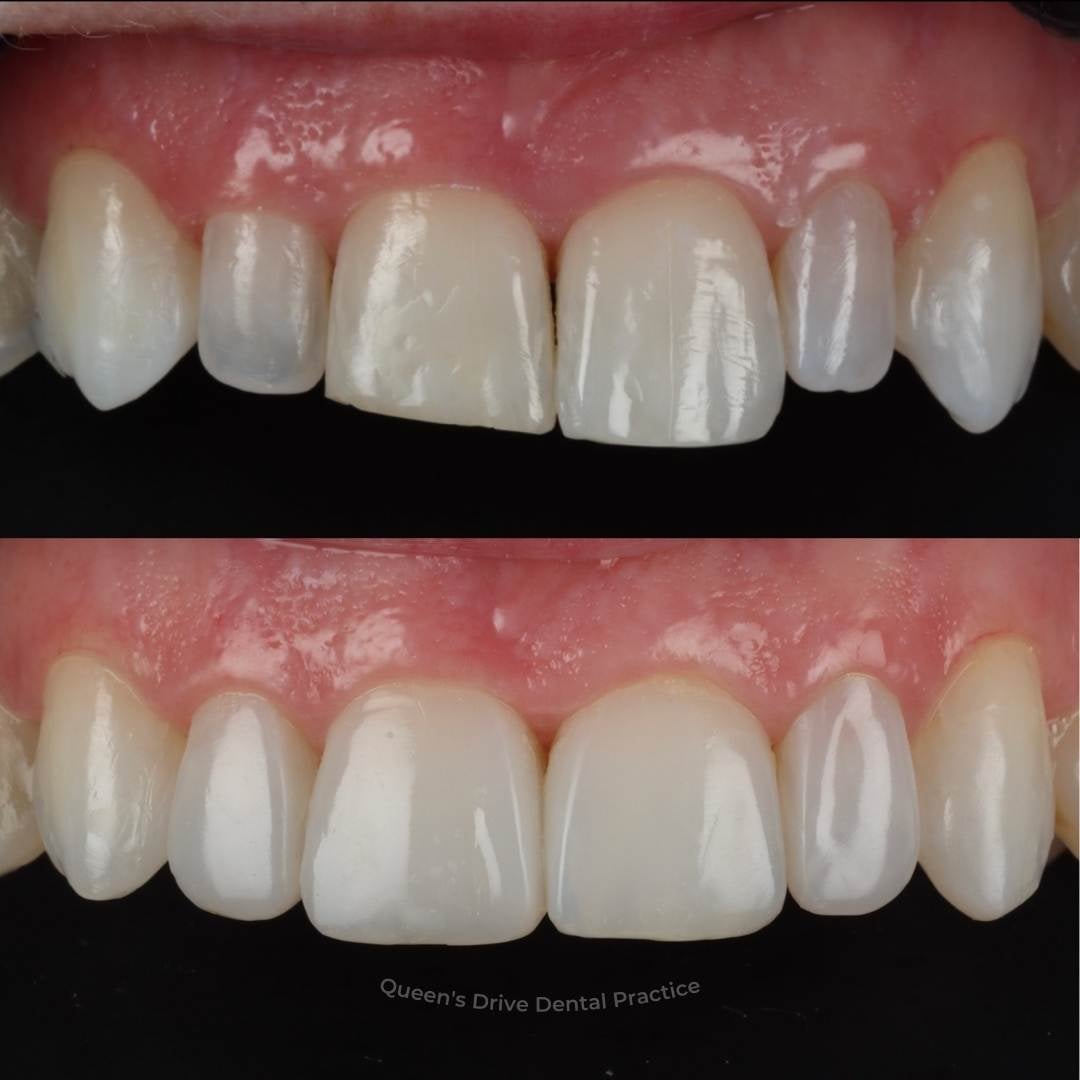
A chipped tooth can happen when you least expect it. Whether it’s caused by biting into something hard, a sporting accident or everyday wear and tear, even a small chip can affect the appearance of your smile and sometimes leave the tooth feeling rough or uneven.

The good news is that many chipped teeth can be improved with composite bonding. This minimally invasive cosmetic treatment is designed to restore the natural appearance of your tooth while preserving as much healthy tooth structure as possible.

At Queens Drive Dental Practice, we help patients throughout Glasgow restore their smiles with personalised composite bonding treatments that look natural and feel comfortable. In this guide, we’ll explain how composite bonding can repair chipped teeth, who it’s suitable for and what you can expect from treatment.

What Causes a Chipped Tooth?

Teeth are incredibly strong, but they’re not indestructible.

A chip can occur for many reasons, including:

  • Biting hard foods or objects.
  • Sporting injuries.
  • Falls or accidents.
  • Teeth grinding or clenching.
  • Natural wear over time.

Some chips are purely cosmetic, while others may expose the tooth to further damage if left untreated. That’s why it’s always worth having a chipped tooth assessed by your dentist.

How Does Composite Bonding Repair Chipped Teeth?

Composite bonding uses a tooth-coloured resin that is carefully applied to the damaged area of the tooth.

Your dentist will shape the material to recreate the tooth’s natural contours before polishing it to blend seamlessly with the surrounding teeth.

The aim isn’t simply to cover the chip—it’s to restore the tooth so that it looks and feels natural again.

Because the material is colour-matched to your existing teeth, the finished result is often difficult to distinguish from the surrounding enamel.

Is Every Chipped Tooth Suitable for Composite Bonding?

Composite bonding is an excellent solution for many small to moderate chips, but every situation is different.

The most suitable treatment depends on:

  • The size of the chip.
  • Which tooth has been affected.
  • Your bite.
  • The overall health of the tooth.
  • Your cosmetic goals.

If the tooth has more extensive damage, another restorative treatment may provide better protection.

A consultation allows your dentist to recommend the most appropriate option for your individual smile.

More Than Just Repairing Chips

Although repairing chipped teeth is one of the most common reasons patients choose composite bonding, it’s far from the only benefit.

Composite bonding can also improve:

  • Uneven tooth shapes.
  • Small gaps between teeth.
  • Worn tooth edges.
  • Minor imperfections.
  • Overall smile symmetry.

Many patients are surprised by how much difference small changes can make to the appearance of their smile.

Will My Tooth Look Natural Afterwards?

One of the biggest advantages of composite bonding is its ability to blend naturally with your existing teeth.

Modern composite materials are available in a range of shades, allowing your dentist to carefully match the colour of your smile.

Each restoration is individually shaped and polished to create a finish that looks balanced, healthy and natural.

The goal is for people to notice your smile—not your dental treatment.

Looking After Your Composite Bonding

Once your treatment is complete, caring for composite bonding is straightforward.

We recommend:

  • Brushing twice daily.
  • Cleaning between your teeth every day.
  • Attending regular dental check-ups.
  • Visiting your hygienist as advised.
  • Avoiding biting hard objects such as pens or ice.
  • Wearing a protective mouthguard during contact sports if appropriate.

With good care, many patients continue to enjoy the benefits of composite bonding for many years.

Why Choose Queens Drive Dental Practice?

At Queens Drive Dental Practice, we understand that even a small chip can affect your confidence.

Our experienced team provides personalised cosmetic dentistry designed around your individual needs. Every treatment is carefully planned to restore both the appearance and function of your smile while preserving healthy tooth structure wherever possible.

Whether you’ve recently chipped a tooth or you’ve been considering cosmetic improvements for some time, we’re here to help you explore your options.

Book a Consultation Today

If you’ve chipped a tooth and would like to find out whether composite bonding is the right solution, we’d be delighted to help.

Book a consultation with Queens Drive Dental Practice in Glasgow, where we’ll assess your smile, answer your questions and recommend the treatment that’s best suited to your needs.

Together, we’ll help restore your smile and your confidence.

Frequently Asked Questions

Is composite bonding suitable for repairing chipped front teeth?

Yes. Composite bonding is commonly used to repair chipped front teeth because the material can be carefully shaped and colour-matched to create a natural-looking finish.

Will the repaired tooth look different?

The aim of composite bonding is to blend seamlessly with your natural teeth. Your dentist will carefully match the colour and shape of the composite resin to your smile.

Should I leave a chipped tooth untreated?

Even a small chip should be assessed by a dentist. While some chips are cosmetic, others can weaken the tooth or increase the risk of further damage if left untreated.

Continue reading

Dental Implants in Glasgow: What the Process Involves and Why Queens Drive Dental Practice Is the Right Place to Start | Alternatives To Dental Implants

Dental Implants in Glasgow: What the Process Involves and Why Queens Drive Dental Practice Is the Right Place to Start

Dental Implants in Glasgow: What the Process Involves and Why Queens Drive Dental Practice Is the Right Place to Start

Dental implants are the most permanent and natural-feeling solution available for replacing a missing tooth, and for patients who are suitable they are almost always the first recommendation. But the process is more involved than most people expect when they first start researching, and the quality of the result depends enormously on the skill and experience of the team delivering it.

Queens Drive Dental Practice is based on Queens Drive in Glasgow’s Southside. With 389 Google reviews, award recognition at the 2025 Dentistry Awards, and a team that includes a registered specialist in oral surgery, the practice is one of the most experienced implant providers in Glasgow.

H2: Why Choose Queens Drive Dental Practice for Dental Implants in Glasgow?

Choosing the right provider for implant treatment is one of the most significant dental decisions you will make. At Queens Drive Dental Practice, the combination of clinical depth available is exceptional for a general dental setting.

John Paul Delaney, the practice’s GDC registered principal dentist (GDC 244170), has a particular interest in implant dentistry and has been developing his skills in this area since graduating from the University of Glasgow in 2013. He is supported by Olivia Arthur, who is currently completing a postgraduate diploma in Implant Dentistry, and by Julie Burke, a registered specialist in oral surgery since 2008 who has been providing sedation for complex surgical procedures for over 20 years. Having a specialist oral surgeon as part of the team means patients with more complex cases receive the full scope of care in-house without needing to be referred elsewhere.

The practice uses laser-assisted implant techniques and backs every implant with a lifetime warranty. Pain-free treatment is a written guarantee: if you feel pain during any private procedure, your treatment visit is free.

Patient reviews reflect a consistently positive experience. One patient who had complex treatment including an implant wrote: “I smile at every opportunity. The confidence it has given me makes such a difference.” A nervous patient who had extractions and fillings wrote: “Anthony explained everything, was patient and not judgemental. I didn’t feel any pain at all, not even a nip from the injection.” Another patient who had an oral surgery procedure under sedation wrote: “Julie and Leighanne had me laughing just before I was sedated and before I knew it, it was over. I couldn’t recommend this place any higher.”

What Is a Dental Implant?

A dental implant is a small titanium post placed surgically into the jawbone where a tooth root used to be. Over several months, the bone grows around and fuses with the post in a process called osseointegration. Once that bond is confirmed, a custom-made crown is attached on top.

The result is a replacement tooth anchored directly into the jaw. It does not move, does not rely on neighbouring teeth for support, and requires no special maintenance beyond normal brushing and flossing. Most patients describe the finished result as completely indistinguishable from their natural teeth.

Why Implants Are the Gold Standard for Missing Teeth

When a tooth is lost, the jawbone at that site begins to lose density. A natural root transmits biting forces into the bone every time you eat, and without that stimulation the bone slowly resorbs. Over time this affects the shape of the jaw, the stability of neighbouring teeth, and in cases of multiple missing teeth, the appearance of the face.

Dentures and bridges replace the visible tooth but do nothing to prevent this bone loss. An implant is the only tooth replacement that replicates the function of a root, stimulating the bone and maintaining the structure that would otherwise be lost.

Beyond bone preservation, implants offer a level of stability and natural function that other restorations cannot match. With proper care, they are designed to last a lifetime.

Who Is Suitable for Dental Implants in Glasgow?

Most healthy adults who are missing one or more teeth are potentially suitable for implants. The key requirements are sufficient bone volume at the implant site, healthy gums, and good general health to support healing after a minor surgical procedure.

Patients who have had a missing tooth for some time may have experienced bone loss at the site. In many cases this can be addressed with bone grafting before or at the time of implant placement.

Active gum disease needs to be treated and stable before an implant is placed. Uncontrolled gum disease around an implant is one of the main causes of failure, so this is always addressed first. John Paul Delaney has a particular interest in the treatment and prevention of gum disease, which directly supports long-term implant success.

Smoking increases implant failure rates and your dentist will discuss this honestly with you at your consultation. Medical conditions that affect healing require individual assessment. For patients with significant dental anxiety, sedation is available under the care of Julie Burke, whose experience with anxious patients spans over two decades.

The only reliable way to know whether implants are right for your situation is a thorough clinical assessment. At Queens Drive Dental Practice, that process begins with a complimentary consultation with Smile Advisor Olivia, who will walk you through your options with no commitment and no pressure.

The Dental Implant Process at Queens Drive Dental Practice

Your Complimentary Consultation

Your first step is a complimentary consultation with Smile Advisor Olivia at Queens Drive Dental Practice. Olivia will take the time to understand your goals and concerns, explain the options available, and ensure you feel fully informed before any clinical assessment takes place. There is no commitment and no pressure at this stage.

Clinical Assessment and Planning

Your dentist will carry out a full examination including digital X-rays and 3D imaging to assess bone volume and anatomy at the implant site. A detailed treatment plan is built from this assessment covering every stage, the full timeline, and a complete written breakdown of costs before anything moves forward. Written quotations are provided as standard.

Any Preparatory Treatment

If the tooth is still present it is extracted first. If bone grafting is needed it takes place at this stage and is given time to heal before implant placement. Not every patient requires preparatory work, but when it is needed it is the foundation for a lasting result.

Laser-Assisted Implant Placement

Queens Drive Dental Practice uses laser-assisted implant techniques for a more precise and minimally invasive placement. The procedure is carried out under local anaesthetic using the practice’s five-step pain-free protocol: numbing gel applied first, warmed anaesthetic, the shortest and finest needles, a slow injection rate, and a computer-assisted delivery system. Sedation is available for patients who would benefit from additional support during the procedure.

Healing and Osseointegration

The implant is left to fuse with the bone over three to six months. Check-up appointments monitor progress during this period but there is no active treatment. A temporary restoration keeps the gap closed while healing takes place.

H3: Your Crown

Once osseointegration is confirmed, a digital scan or impressions are taken to fabricate your custom crown. The crown is matched to the colour, shape, and size of your surrounding teeth. When it is fitted, the implant is complete and fully functional.

Oral Surgery Expertise and Sedation at Queens Drive

One of the features that sets Queens Drive Dental Practice apart from most Glasgow dental practices is the presence of Julie Burke, a registered specialist in oral surgery since 2008, who has been providing sedation for complex procedures and anxious patients for over 20 years. For patients whose implant case involves surgical complexity, or who need sedation to feel comfortable during placement, having this level of specialist support in-house is a significant advantage.

Julie works alongside the implant team to ensure that patients who need more involved care receive it without the disruption of being referred to a separate specialist practice.

Full Mouth Dental Implants in Glasgow

For patients who are missing multiple teeth or who require a full arch restoration, Queens Drive Dental Practice offers comprehensive full mouth implant solutions including implant-supported dentures and same-day teeth on implants.

One of the practice’s most detailed patient stories features Linda, who came in with a drifting tooth causing repeated infections. When the tooth could not be saved, Olivia Arthur guided her through a full restoration plan that included an implant. A full assessment and treatment plan will give you a clear picture of what is involved and what the cost looks like before any decisions are made.

How Long Do Dental Implants Last?

With proper care, the implant post is designed to last a lifetime. The crown may need replacing after 15 to 20 years depending on wear, but the implant itself rarely requires intervention once it has successfully integrated.

Good oral hygiene and regular check-ups are the main requirements for long-term success. Hygienist Phyllis Nelson, who has been at Queens Drive since qualifying from Glasgow Dental Hospital in 1990, and dental therapist Thurga support patients in maintaining the gum health that underpins long-term implant success.

Dental Implant Costs and Finance Options in Glasgow

The cost of a dental implant depends on how many are being placed, whether preparatory work is needed, and the type of crown used. A complete written breakdown of costs is provided before any commitment is made. This is one of the practice’s five written promises to every patient.

Finance options are available to help spread the investment and are discussed at your complimentary consultation so you have a clear picture of your monthly commitment before agreeing to anything.

Book Your Complimentary Consultation at Queens Drive Dental Practice, Glasgow

Queens Drive Dental Practice is at 118 Queens Drive, Glasgow, G42 8BJ. Call 0141 423 5161 or book your complimentary consultation online at queensdrivedentalpractice.co.uk. The practice serves patients from across the Glasgow Southside including Pollokshields, Mount Florida, Battlefield, Langside, and Shawlands.

Frequently Asked Questions

Who carries out dental implants at Queens Drive Dental Practice in Glasgow?

Implant treatment is led by John Paul Delaney (GDC 244170), who graduated from the University of Glasgow in 2013 and has a particular interest in implant dentistry. He is supported by Olivia Arthur, who is currently completing a postgraduate diploma in Implant Dentistry, and by Julie Burke, a registered specialist in oral surgery since 2008, who provides sedation for more complex procedures.

Are dental implants painful at Queens Drive Dental Practice?

Queens Drive Dental Practice guarantees pain-free treatment backed by a money-back promise. Implant placement uses a five-step pain-free protocol and laser-assisted techniques. Sedation is available for patients with dental anxiety. As one patient described: “I didn’t feel any pain at all, not even a nip from the injection.”

How long does the dental implant process take in Glasgow?

From consultation to fitted crown, most single-tooth cases take between six and twelve months. The majority of that time is the osseointegration phase rather than active appointments. Cases requiring bone grafting take a little longer but the final result is the same.

Can I get a dental implant if I have had a missing tooth for several years?

In most cases yes, though bone loss at the site may mean grafting is needed before placement. Your dentist will assess bone volume with imaging at your consultation and advise clearly on what is involved. Acting sooner is always simpler, but patients who have had a gap for years are frequently still suitable for treatment.

Does Queens Drive Dental Practice offer finance for dental implants?

Yes. Finance options are available to help spread the cost of implant treatment. These are discussed at your complimentary consultation with Smile Advisor Olivia so you know your full monthly commitment before agreeing to anything.

Are dental implants available on the NHS in Glasgow?

NHS provision for dental implants is very limited and typically restricted to specific clinical criteria. In most cases implants are provided privately. Queens Drive Dental Practice offers finance options to help make the investment manageable.

What happens if I do not replace a missing tooth?

Leaving a gap leads to gradual bone loss at the site, drifting of neighbouring teeth, and changes to your bite over time. These effects compound and make future treatment more complex. Replacing a missing tooth promptly is considerably simpler and more cost-effective than addressing the secondary problems that develop if the gap is left untreated.

Continue reading

Your Guide to Smile Makeovers in Glasgow: Treatments, Results and What to Expect | Queens Drive Website Photos

Your Guide to Smile Makeovers in Glasgow: Treatments, Results and What to Expect

Your Guide to Smile Makeovers in Glasgow: Treatments, Results and What to Expect

Smile design in Glasgow at Queens Drive Dental Practice covers a broad range of cosmetic dental treatments that can be combined in different ways depending on your specific goals. This guide is for patients who are seriously considering a smile makeover and want a clear, honest picture of the treatment options available, what each delivers and what kind of results are realistically achievable.

Clarifying What You Want to Change

The most important first step in successful smile design is being specific about your goals. Not every patient who feels self-conscious about their smile is bothered by the same things. Some are primarily concerned with colour. Others with the shape or size of specific teeth. Some want a subtle improvement that makes their smile look healthier and more polished. Others want a comprehensive transformation.

Being clear about what you want to change, and equally clear about what you do not want to change, gives your dentist the information needed to plan a result that genuinely reflects your vision. At Queens Drive Dental Practice in Glasgow, our consultation process is designed to draw out this clarity before any treatment is proposed. Learn more at queensdrivedentalpractice.co.uk.

Professional Teeth Whitening

Professional whitening is the most accessible entry point in smile design and the starting point for many comprehensive makeovers. Prescription-strength whitening gel in custom-fitted trays produces results that are significantly more even and dramatic than anything available without a dental prescription.

In a makeover context, whitening is typically done first. This establishes the new base colour of the natural teeth so that any veneers, bonding or other restorations placed afterwards can be shade-matched to the brighter tone. The result is a consistent and natural colour throughout the whole smile.

Composite Bonding

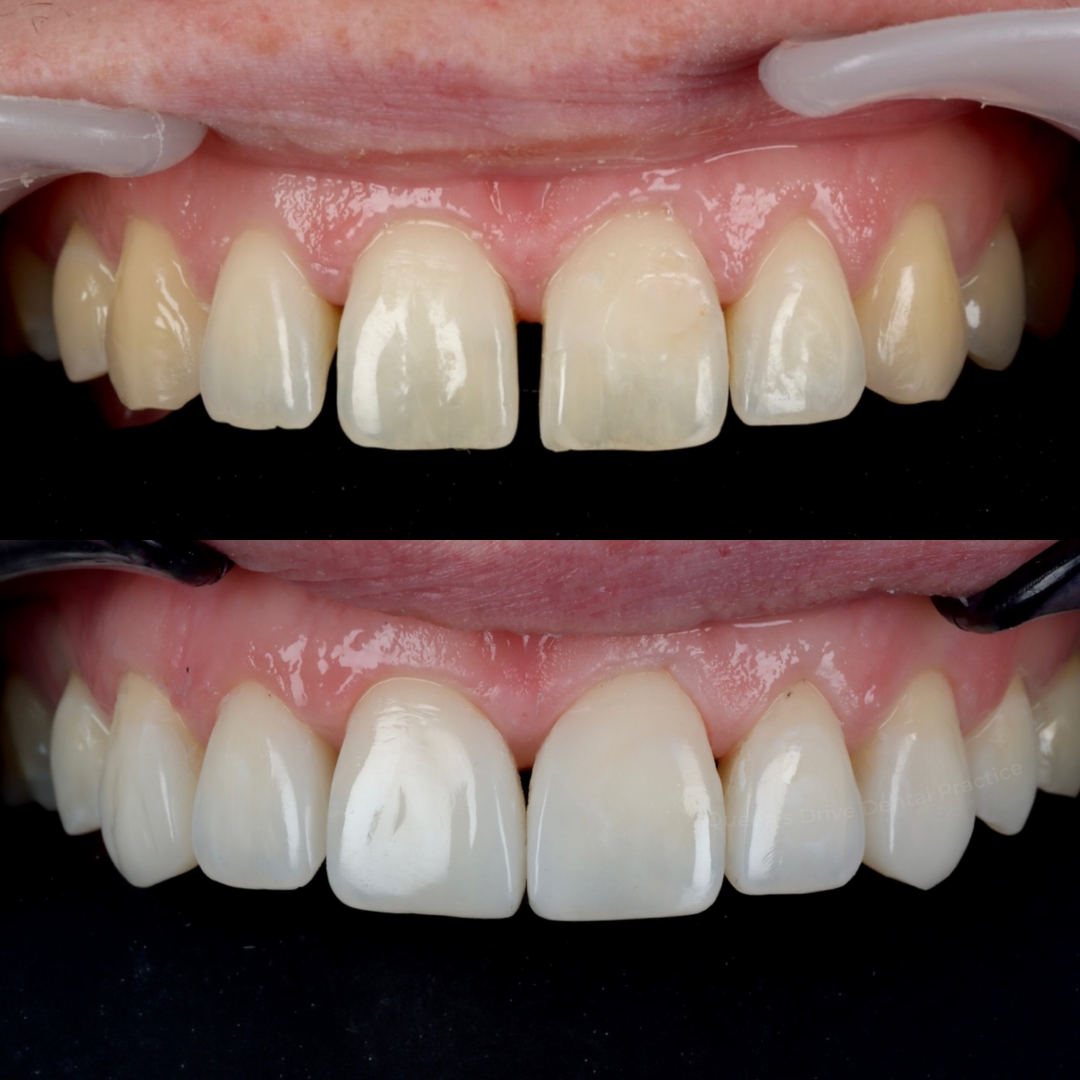
Composite bonding uses tooth-coloured resin applied, shaped and hardened directly on the tooth to repair chips, close gaps, improve the contour of uneven teeth and refine the overall proportion of the smile. It can be completed in a single appointment, requires minimal or no preparation of the natural tooth and delivers immediate, visible results.

Bonding is an excellent option for patients wanting a meaningful improvement without the commitment of porcelain veneers, and for those who want to see the direction of the look before investing in something more permanent. Results last five to seven years before needing refreshing.

Porcelain Veneers

Porcelain veneers are the most comprehensive option in smile design. Ultra-thin ceramic shells fabricated in a dental laboratory to precise specifications are bonded permanently to the front of the treated teeth, addressing colour, shape, size and surface texture all at once.

The quality of porcelain used in high-end veneers gives them a depth and translucency that makes them virtually indistinguishable from natural teeth. With proper care and regular dental attendance, porcelain veneers last 15 years or more and maintain their appearance significantly better than composite alternatives over the long term.

Gum Contouring

The gumline plays a significant role in how the smile looks and is often overlooked by patients who focus entirely on the teeth. An uneven gumline or one that sits too low creates a visual imbalance that tooth treatment alone cannot fully address.

Laser gum contouring reshapes excess or uneven gum tissue with precision. The laser cauterises as it works, reducing bleeding and supporting a straightforward recovery. The result is a more symmetrical and balanced gumline that allows the teeth to be the focus of the smile rather than an imbalanced frame.

What Results Can You Realistically Expect?

Skilled cosmetic dentistry enhances the smile you have in a way that suits your face and looks genuinely natural. Patients at Queens Drive Dental Practice consistently experience: teeth that are whiter and more consistent in colour, a more balanced and proportionate smile, the elimination of chips gaps and worn surfaces, a gumline that frames the smile more attractively, and a finished result that looks natural and genuinely suits their face.

Patients also consistently report: greater confidence in smiling, reduced self-consciousness in professional and social situations, a feeling that their smile now reflects how they feel on the inside and genuine satisfaction with their result in photographs and everyday life.

Frequently Asked Questions

How long does the smile design process take at Queens Drive in Glasgow?

A whitening and composite bonding plan typically takes two to three appointments over a few weeks. A plan including porcelain veneers takes four to six appointments over four to eight weeks to allow for laboratory fabrication. Your dentist will give you a specific timeline at your consultation.

Is smile Makeovers in Glasgow suitable for patients who have had dental work before?

Yes. Many patients have existing fillings, crowns or other restorations. Your dentist will assess these at your consultation and advise on how they interact with the planned cosmetic treatment. In some cases existing restorations may need to be updated as part of the makeover to ensure a consistent final result.

What maintenance does smile design require in Glasgow?

Good oral hygiene is the foundation: brushing twice daily, flossing daily and attending regular check-up and hygiene appointments. A custom night guard is strongly recommended if you grind your teeth at night. Whitening top-ups maintain the colour result over time. Beyond these straightforward habits, your normal routine does not need to change.

Book Your Smile Design Consultation at Queens Drive Dental Practice in Glasgow

Ready to take the next step and find out what smile design in Glasgow could achieve for your confidence? Book your consultation at Queens Drive Dental Practice and get a personalised plan built around your specific concerns, your goals and the result you genuinely want.

Continue reading

Let Me Ask You, Are You Ready To Transform Your Smile?

Would you like to know if you are suitable for one of the many smile transformational treatments we offer at Queen's Drive Dental Practice? Just pop your details into the form below or call us on 0141 423 5161 to request a complimentary consultation with one of our smile advisors.

If you are looking to book an appointment with a dentist or hygienist you don’t need to speak to a Smile Advisor.

Book A Complimentary Consultation With our Smile Advisor Today

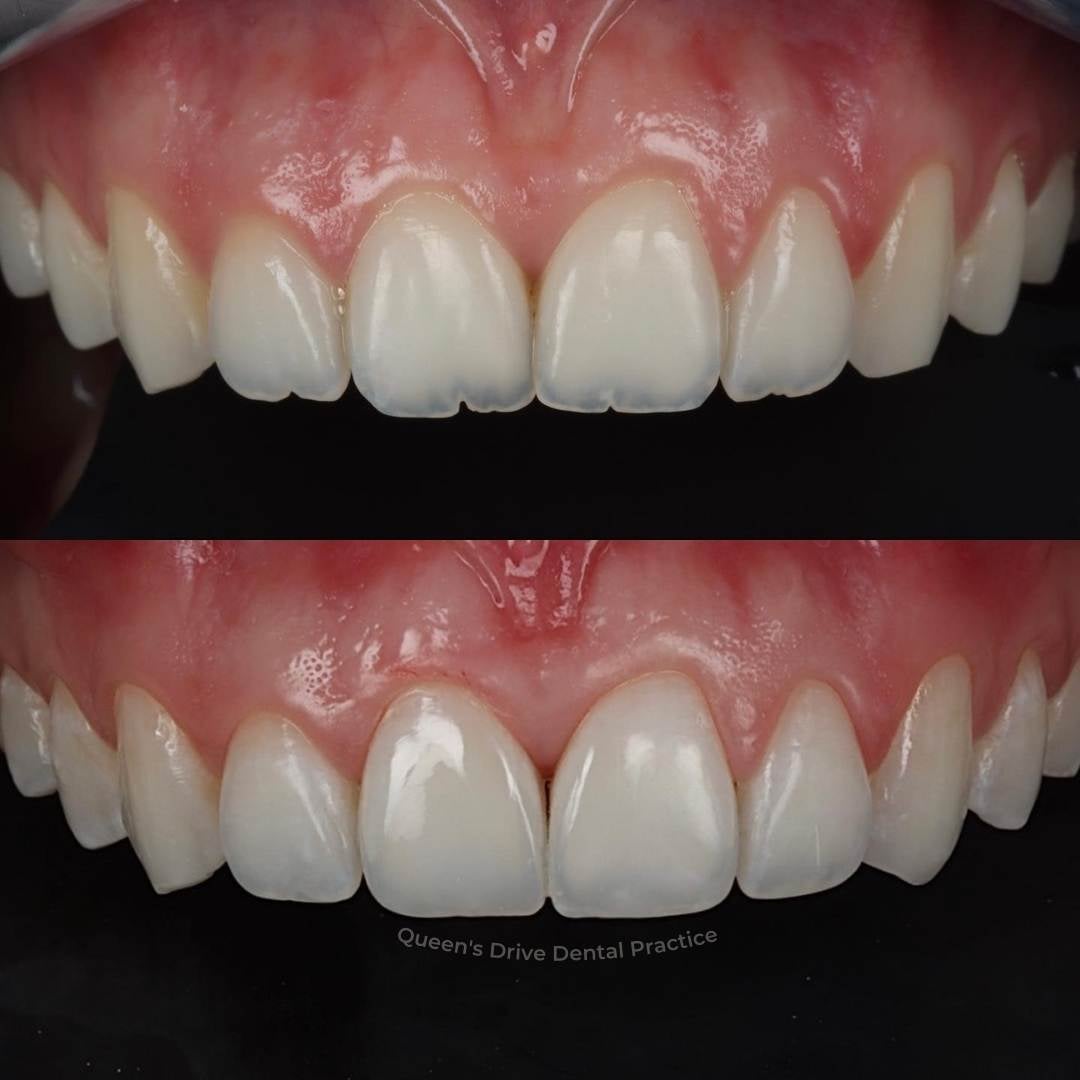
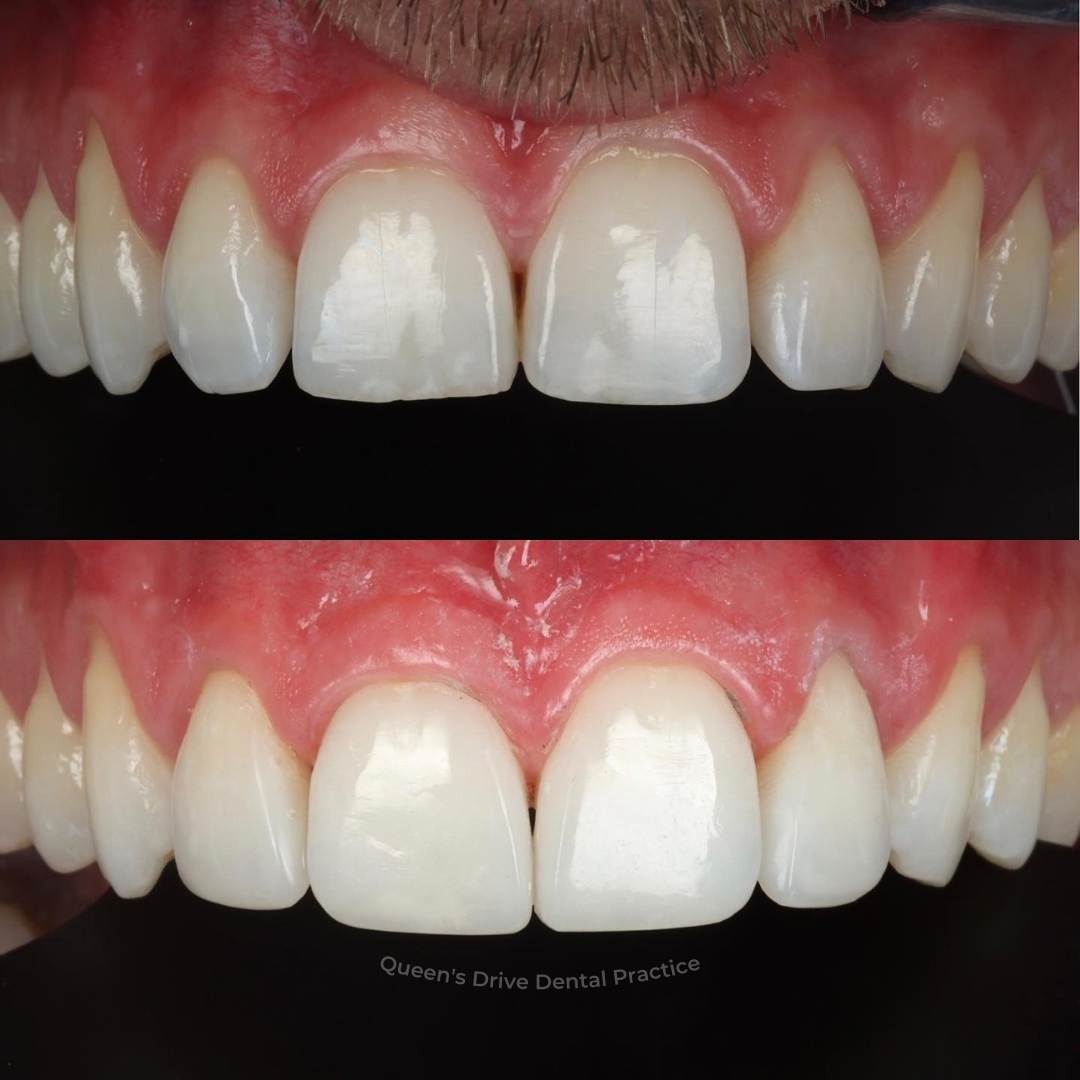
Before and after treatment at Queens Drive Dental in Glasgow

Queen's Drive Dental Practice 118 Queen's Dr, Glasgow, G42 8BJ